Chrissie–Josie relationship
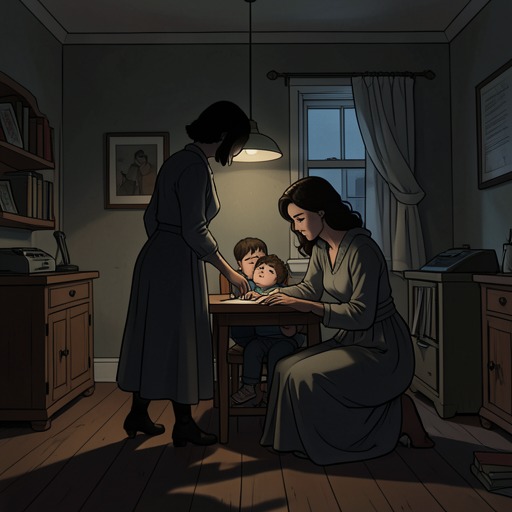
Klara and the SunJosie and her mother, Chrissie, share a bond expressed through routine care, anxious disputes over illness, and a consequential decision about Josie’s future. Chrissie’s protection can become pressure: she tries to recognize danger before Josie will admit to it, while Josie wants both the freedom to speak for herself and the reassurance of her mother’s presence. Their relationship reaches its clearest affirmation when Josie’s message to Chrissie confirms that she loves her and would choose the same mother again, including the decision to have her lifted.
Everyday Care and the Need for Nearness
The relationship is visible in small repeated rituals as much as in crisis. Each morning, Klara wakes Josie in time to join Chrissie for coffee in the kitchen. Josie often delays until the last moment, then calls urgently from her en suite bathroom, while Klara waits on the landing. The brief breakfast matters because it gives mother and daughter a chance to sit together before Chrissie leaves for work. When Klara once lets Josie sleep longer after a difficult night, Josie hurries downstairs only to see Chrissie’s car already departing. She does not scold Klara again, but she eats without smiling; Klara understands that missing this meeting can leave loneliness in Josie’s day despite whatever else happens. The ritual is modest, but its importance is not.
Chrissie’s attentiveness also has to contend with Josie’s vulnerability and her reluctance to be treated as ill. When Josie’s breathing and posture seem abnormal, Klara raises the alarm; Chrissie comes immediately and calls Dr Ryan. After he finds nothing to worry about, Chrissie’s relief turns into brisk admonition about Josie’s energy drink. She tells her that worrying about Josie is her work, and adds that it is Klara’s work too. Care here is a shared responsibility, but Chrissie remains the parent who must interpret signs of danger and act on them.
That vigilance can become a direct conflict over who gets to name Josie’s condition. During a later journey, Chrissie tells her daughter that she is sick again; Josie insists that she is fine. Chrissie objects not only to the illness but to Josie concealing it until the family has set out for the day. Josie answers that it is unfair to call her sick when she feels strong enough. Their disagreement reveals different burdens: Chrissie fears being kept ignorant of a serious recurrence, while Josie resists having her own account of her body overridden. The dispute does not cancel their attachment; it shows how fear and care can make intimacy tense.
Protection, Autonomy, and Josie’s Future
Chrissie’s concern extends beyond immediate health to the circumstances that will shape Josie’s life. When Josie asks to have Rick at an interaction meeting, Chrissie agrees, recognizing that he is a good person and their neighbor. The concession matters because Josie does not regard the other children as her friends and does not want to face the meeting on terms set entirely by her mother. Chrissie’s acceptance gives Josie a say in who will stand beside her.
The mother’s understanding of protection is also framed by Josie’s decision to be lifted. Chrissie later explains to Rick that Josie was hungry for life from the moment she first held her: the world excited her, and Chrissie believed she could not deny her the chance of a future worthy of that spirit. In contrast, she describes Rick as having played safe while Josie took a gamble. Her language exposes the weight she assigns to the decision: it was not merely a choice made for a child, but a wager on the possibility of a fuller future, with the risk of losing something precious.
The same protective impulse surfaces when Chrissie proposes giving up her job to stay with Josie all the time. Josie recounts that her mother offered to become the person who was always with her, if that was what she wanted. But Josie observes that Chrissie had not thought the idea through: it would mean no longer needing Klara, and Josie did not want to give her up. She tells Chrissie that the arrangement would not work, and says her mother agrees. When Klara suggests that Chrissie may have been trying to keep Josie from loneliness, Josie rejects the premise that she is lonely. The exchange shows that devotion does not mean Josie welcomes every form of protection; she can refuse her mother’s proposed sacrifice while affirming the value of the care she already receives.
Illness and the Limits of Reassurance
As Josie’s illness returns, the relationship is strained by the distance between Chrissie’s fears and Josie’s assurances. Chrissie recognizes that something is wrong and challenges Josie for hiding it; Josie denies being sick. The confrontation is painful because neither position is simply indifference or denial: Chrissie is frightened by what may happen, while Josie insists on her strength and resists having fear determine every conversation. Their exchanges make illness a shared family problem, but not one they can experience or describe in the same way.
That strain becomes explicit when Josie says she does not want to die. Chrissie holds her, and answers softly that it is okay. The scene brings their relationship to its most direct expression of fear and comfort: Josie can name the possibility she dreads, and her mother responds by staying physically close rather than arguing about what the illness means. The reassurance cannot establish an outcome, but the embrace makes Chrissie’s presence immediate within a future neither can control.
The Message That Settles the Question of Choice
Later, when Chrissie challenges Rick about whether he feels he has come out a winner while Josie may be about to lose, Rick tells her that Josie has entrusted him with a message. He says she loves Chrissie and will always love her, is grateful to have her as her mother, and never wished for another. Most decisively, Josie says she would choose to be lifted exactly as Chrissie chose for her, even if she had the power to decide again. This message answers the fear beneath Chrissie’s account of the gamble: Josie does not blame her for taking it, but regards the decision as part of a life she would still choose.
The message does not erase the risk or make the earlier conflicts disappear. Instead, it gives Chrissie the reassurance Josie had not yet been ready to deliver directly. Rick judges that the right time has come to pass it on; Chrissie listens, first expressionless, then calls it a powerful message. The relationship is thereby shown to contain both the mother’s fear of having chosen wrongly and the daughter’s enduring gratitude for the choice.
Care After the Crisis
When Josie later shows new strength, Chrissie watches her closely. Asked how she feels, Josie shifts herself to face the others; Chrissie moves toward her, apparently ready to make her lie back, then changes course and helps her find a more comfortable sitting position. The adjustment is small but telling: protection gives way to assistance that follows Josie’s movement rather than stopping it. Josie notices the attention and asks why everyone is staring, while Chrissie tells her she looks better.
Their care remains intertwined with the lives each must lead. Chrissie’s willingness to give up her work suggests how far she might go to stay beside Josie, but Josie refuses the idea that love requires that sacrifice. Later, Klara observes that Josie and Rick remain kind to one another even as they prepare very different futures; Chrissie’s relationship with her daughter is likewise defined not by sameness of plans but by the enduring connection beneath difficult choices. Josie’s final message makes that connection unusually explicit: she loves her mother, values the mother she had, and would not reverse the decision that shaped her life.